Posts

Showing posts with the label FWRA

Followers

Unveiling a Hidden Gem: The Discovery of a New Freshwater Red Algal Species (Sheathia meghalayensis Elaya Perumal & Palanisamy, 2026) in Meghalaya, India by Botanical Survey of India

Image
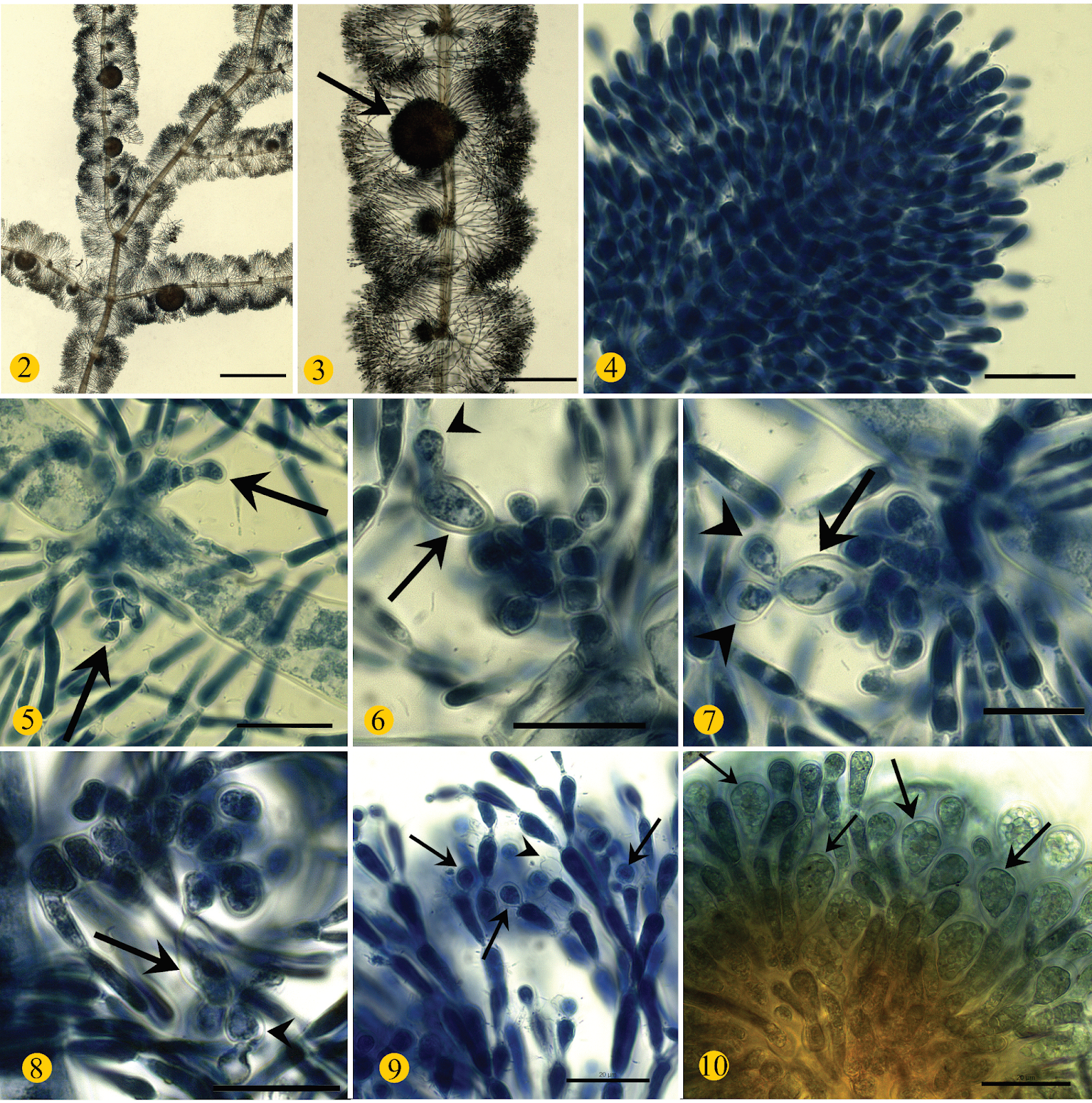
The Discovery of Sheathia meghalayensis   Elaya Perumal & Palanisamy, 2026 The world of phycology—the study of algae—just got a little more fascinating. While marine red algae dominate our coastal vocabulary, their freshwater counterparts, the Rhodophyta, represent an ancient and highly specialized evolutionary lineage. (Photo credit: Dr. U Elaya Perumal, Botanical Survey of India) In a paper published in Current Science , researchers U. Elaya Perumal and M. Palanisamy from the Botanical Survey of India announced a major taxonomic breakthrough: the discovery of a distinct, critically endangered freshwater red alga named Sheathia meghalayensis  Elaya Perumal & Palanisamy, 2026 . (Photo credit: Dr. U Elaya Perumal, Botanical Survey of India) The Background: Filling a Critical Gap in India’s Biodiversity Northeastern India is recognized as a global biodiversity hotspot, yet its freshwater macroalgae have historically lagged behind marine species in documentation. Prior su...

A New species of red alga has been named after our Senior Scientist Prof. B. B. Chaugule | Kumanoa chaugulei new species of red algae from Kerala

Image
 Dear researchers and Students,     This article introduces Kumanoa chaugulei Jayalakshmi & John, 2021... Kumanoa chaugulei  Jayalakshmi & John from Kerala (Phycologia)     Kumanoa chaugulei is a newly described freshwater red algae from Kerala, India. This article is published in Phycologia Journal (17th, June 2021). The alga was collected from Idamalayar, a major tributary of Periyar River, Kerala, India, and described based on morphology and molecular phylogeny.  This is the first study from India on Batrachospermacea e with Molecular phylogeny data. In the introduction, the authors have discussed Freshwater red algae and Batrachospermales members and on previous reports. In materials and methods the collection site with GPS, morphology, and molecular data methods. The result part has Morphology and molecular data. Maximum-likelihood (ML) tree has been generated using the rbcL and COI-5P concatenated sequence data. Morphologica...

Popular posts from this blog

AARI Institutional Day & World Oceans Day Quiz 2025

AARI - Free Practice Test on Biology UNIT 2 BIOLOGICAL CLASSIFICATION MCQs Part - V : This series of quiz will enhance you to get knowledge related to BIOLOGY for various competitive Exams....

AARI Summer Internship on Algal Biotechnology for Pachaiyappa's College, Chennai Students May-June 2025